

Adopt
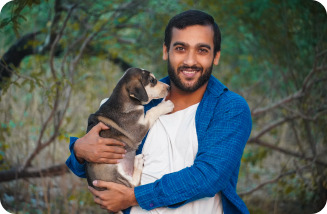
Animal adoption is the process of providing a permanent home for a stray animal from a shelter or rescue organization.
Foster
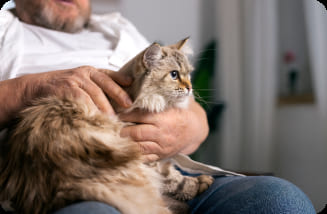
Foster care services for animals and providing appropriate care for them.
Caretaker
Volunteer to help raise animals and provide them with proper care.
.png)
One Health: Why Vaccinating Animals Protects Your Community
Wednesday, September 30, 2026When we see an animal receiving a vaccination, the scene may seem simple: one animal, one dose, a few minutes. But the impact of some preventive measures extends far beyond the animal receiving them. When we are dealing with a disease that can pass between animals and people, the health of both becomes part of the same picture. This is where the concept of One Health begins: the recognition that human, animal, and environmental health are interconnected, and that some health challenges cannot be addressed effectively when each is considered in isolation. On World Rabies Day, rabies provides one of the clearest examples of this connection.
When we see an animal receiving a vaccination, the scene may seem simple: one animal, one dose, a few minutes.
But the impact of some preventive measures extends far beyond the animal receiving them.
When we are dealing with a disease that can pass between animals and people, the health of both becomes part of the same picture.
This is where the concept of One Health begins: the recognition that human, animal, and environmental health are interconnected, and that some health challenges cannot be addressed effectively when each is considered in isolation.
On World Rabies Day, rabies provides one of the clearest examples of this connection.
What Does One Health Mean in Practice?
One Health is not a separate discipline. It is a way of looking at health more broadly.
People, animals, and the environment share spaces, systems, and health risks.
When a disease can move between species, responding at only one point is not enough.
This is why international organizations, including the World Health Organization (WHO) and the World Organisation for Animal Health (WOAH), apply the One Health approach to diseases shared between animals and people.
At its core, the idea is simple:
Sometimes, protecting human health begins before a disease ever reaches a person.
Rabies: When Prevention Is the Priority
Rabies is a viral disease that affects the nervous system. It is transmitted to people through the saliva of an infected animal, most commonly through a bite or scratch.
What makes rabies particularly serious is that once clinical symptoms appear, the disease is almost always fatal.
But before symptoms appear, the picture is very different.
Following a potential exposure to an infected animal, prompt and appropriate post-exposure prophylaxis (PEP) can prevent the disease from developing.
This is why rabies prevention works on two complementary fronts: protecting people after potential exposure and reducing transmission among animals in the first place.
In this context, animal vaccination becomes more than a veterinary measure.
It becomes a public health tool.
Why Isn't Vaccinating One Animal Enough?
Vaccinating an individual animal protects that animal.
But reducing disease transmission across an animal population requires organized, broad, and sustained vaccination coverage.
This is why global rabies-control strategies in areas where the disease is endemic focus on mass vaccination of the animals primarily responsible for transmission—particularly dogs, which account for the vast majority of human rabies cases worldwide.
The value does not come from a single dose. It comes from reaching a sufficient proportion of the animal population and maintaining that coverage over time.
This illustrates an important principle of preventive health:
When we reduce transmission at its source, we can protect more than one species at the same time.
Successful Prevention Can Be Invisible
There is a paradox at the heart of preventive work.
Treatment has a visible story: an illness, an intervention, and an outcome.
Successful prevention, on the other hand, often results in nothing happening at all.
No infection.
No transmission.
No case requiring treatment.
That can make the value of prevention harder to see than the value of responding after a problem has already occurred.
But the absence of an event does not mean the absence of impact.
Vaccination, surveillance, and follow-up programs work before a problem appears.
Their success is reflected over time in reduced risk and greater health stability.
Where Do Community Animals Fit In?
One Health is not only about disease. It also considers the environment in which people and animals live together.
This is where structured community animal management becomes important.
Programs such as Trap-Neuter-Vaccinate-Return (TNVR) combine population management, appropriate preventive care within the program, and the return of animals to their environment when returning is the appropriate pathway.
The aim is not simply to treat each animal as an isolated case. It is also to build a better understanding of animal populations within targeted areas and manage them in a structured and sustainable way.
This kind of work requires data, follow-up, and continuity because community animals are part of the urban environments we share.
What Can Individuals Do?
One Health may sound like a large concept, but part of it begins with simple everyday decisions:
Keeping companion animals up to date with vaccinations based on veterinary recommendations.
Avoiding direct contact with an animal displaying unusual behavior or clear signs of illness.
Teaching children not to approach unfamiliar animals or attempt to handle them without supervision.
Understanding that any bite or scratch that may represent a potential rabies exposure requires thorough washing of the wound and prompt medical assessment, rather than waiting for symptoms to appear.
For community animals, the familiar ear-tip used in management programs can help indicate that an animal has previously been through a sterilization program and can help avoid unnecessary recapture.
Knowledge here is not a minor detail.
It is part of prevention.
Why Do Field Programs Need Continuity?
Because managing the health of animal populations cannot be achieved through a single campaign.
Animal populations change. New animals may enter an area, and programs need to know what has already been done and what remains to be addressed.
Effective field programs therefore depend on three interconnected elements:
Coverage
To reach the target area in a structured way.
Continuity
To maintain the program's impact over time.
Follow-Up and Data
To understand where work has been completed and what should happen next.
Together, these elements turn individual interventions into a program that can be monitored, improved, and evaluated over time.
One Health, Shared Responsibility
World Rabies Day comes once a year.
But the principle behind it is not seasonal.
Health does not always begin in a hospital, and it does not always end with people.
Sometimes, it begins in the field with an animal receiving a vaccine. Sometimes, it begins at home with a family keeping their companion animal's vaccinations up to date. And sometimes, it begins with a person knowing what to do after a potential exposure.
At OLFA, community animal management and preventive care are part of a broader understanding of the relationship between animal health, community health, and the environment we all share.
Because One Health is more than a concept connecting three areas.
It is a reminder that protecting one can extend protection to the others.
And when prevention begins before a threat reaches people, protecting animal health becomes part of protecting the community.
Together, We Make a Difference
Have a question, want to report a stray, or ready to adopt? OLFA's team is here to help you every step of the way.