.png)


Adopt
Animal adoption is the process of providing a permanent home for a stray animal from a shelter or rescue organization.
Foster
Foster care services for animals and providing appropriate care for them.
Caretaker
Volunteer to help raise animals and provide them with proper care.
.png)
Teaching Compassion: Why Animal Welfare Belongs at School and at Home
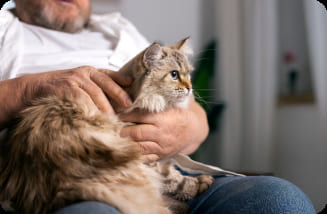
unknown dateA child seeing a cat for the first time does not know how to approach it. They put out a hand too quickly, or try to pick it up, or run after it when it moves away. None of this is cruelty. It is the absence of something nobody has told them. And that particular piece of information, that an animal has feelings and has limits, is the simplest thing you can teach a child, and the one with the longest reach.
A child seeing a cat for the first time does not know how to approach it.
They put out a hand too quickly, or try to pick it up, or run after it when it moves away. None of this is cruelty. It is the absence of something nobody has told them.
And that particular piece of information, that an animal has feelings and has limits, is the simplest thing you can teach a child, and the one with the longest reach.
Why Start Early?
Because the way a child handles an animal in their early years becomes a habit before it becomes a belief.
A child who learned to put a hand out slowly and wait will still do it years later without remembering who taught them. A child who got used to grabbing an animal however was convenient will later have to learn, and then unlearn, what they picked up first.
The specialist literature on humane education associates early teaching in this area with more responsible behaviour towards animals later, and with a better ability to read signs of discomfort in other living things.
That last ability, noticing that something in front of you is uncomfortable and adjusting to it, is not useful only around animals.
What Does a Child Actually Need to Know?
Not very much, which is the encouraging part.
To approach calmly, and from a side where the animal can see them, because coming from behind startles an animal and frightens it.
To offer an open hand and then wait, letting the animal decide. An animal that came over on its own is comfortable. An animal that was picked up before it decided is not.
That ears and tails are sensitive and are not for holding, and that lifting an animal the wrong way hurts it even when it does not show that.
That eating and sleeping are private time, and that an animal disturbed in either may react in a way it did not intend.
And that washing hands before and after is simply part of the routine, not a punishment for anything.
What Does a Child Need Not to Do?
Here is the most important message, and it is simpler than it sounds: an animal is not a toy.
A toy can be picked up whenever we like and put down whenever we like, and it is unaffected by either. An animal is affected by both.
Teaching a child to respect an animal’s withdrawal therefore matters more than teaching them how to play with it. When an animal moves away, it is saying something, and the right response is to give it space rather than follow it.
This particular lesson is hard for children at first, because their wish to interact is genuine. But once it lands, it becomes the foundation for an entirely different relationship with the animal.
What About the Child Who Is Frightened?
This child is usually forgotten, because the whole conversation is aimed at the enthusiastic one.
But fear of animals is common in children, it is not a flaw, and the worst thing to do with it is to make light of it or push the child into direct contact.
The approach that works is gradual to the point of seeming slow: letting the child see the animal from a distance they are comfortable with, with no expectation of coming closer. Then talking about it. Then approaching when they decide to, not when they are asked to.
The irony is that this is exactly how we handle a frightened animal: a comfortable distance, time, and no forcing.
And when a child understands that, something striking happens. They discover that what they need is what the animal needs, and that fear on either side responds to the same treatment.
The Home Comes Before the School
Most of what a child learns on this subject does not come from a lesson. It comes from watching.
A child who sees a parent leave water out for a cat on a hot day learns something no class can teach. A child who sees an irritated reaction to an animal in the street learns something too.
So the first place compassion is taught is the home, and it does not require an organised effort. It requires noticing that the child is watching.
It can start with a single sentence said at the right moment: “let him come to you,” or “that is his food, leave him.” Short sentences at the right time do what a long explanation cannot.
And the School’s Role
School adds what the home cannot: other children.
When children talk about animals as a group, something different happens. The child who is frightened hears from another child that fear is normal and that there is a way to handle it. The child who was being rough sees that their friends are not.
And the questions children ask in these sessions are usually sharper than expected. Does the animal know its name? Does it get sad? Why won’t it come to me?
Those questions are the real entry point, because they mean the child has started thinking of the animal as something with an interior rather than something that moves.
When we at OLFA have the opportunity to visit a school, that is what we are looking for. Not to deliver information, but to open the question.
And What About Children and a Household Animal?
Having an animal at home does not teach a child compassion automatically. It creates the opportunity to teach it.
The difference between the two is participation. A child given an age-appropriate share of the care, such as filling the water, preparing food, or noticing a change in the animal’s behaviour, learns that care is continuous work rather than a moment of play.
Observations in this area suggest that children who share in caring for an animal develop a better ability to hold to a routine, and to notice another creature’s need before it is expressed.
When the animal remains entirely the adults’ responsibility and the child only plays with it, the message that lands is a very different one.
It matters here that the task suits the child’s age and that supervision continues. The point is that the child feels responsibility, not that it is offloaded onto them.
What Gets Built on Top of All This?
A child who learned to read an animal’s signals grows into someone who understands that an animal in the street is not automatically a nuisance.
They become, if they ever decide to bring an animal home, someone who knows the first weeks are hard and that trust takes time. That knowledge alone lowers the chance that the decision ends in the animal being given up.
And when they see another child being rough, they become someone able to explain rather than scold.
All of it starts with a short sentence said to a child at the right moment.
Compassion is not a feeling a child is born with and simply keeps.
It is a habit learned early, and it grows with them.
Together, We Make a Difference
Have a question, want to report a stray, or ready to adopt? OLFA's team is here to help you every step of the way.