.png)

Adopt
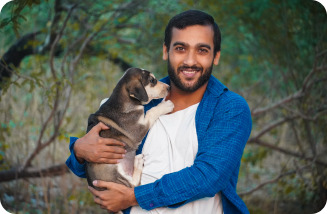
Animal adoption is the process of providing a permanent home for a stray animal from a shelter or rescue organization.
Foster
Foster care services for animals and providing appropriate care for them.
Caretaker
Volunteer to help raise animals and provide them with proper care.
Who Runs Animal Welfare? The Roles Inside a Modern Organisation
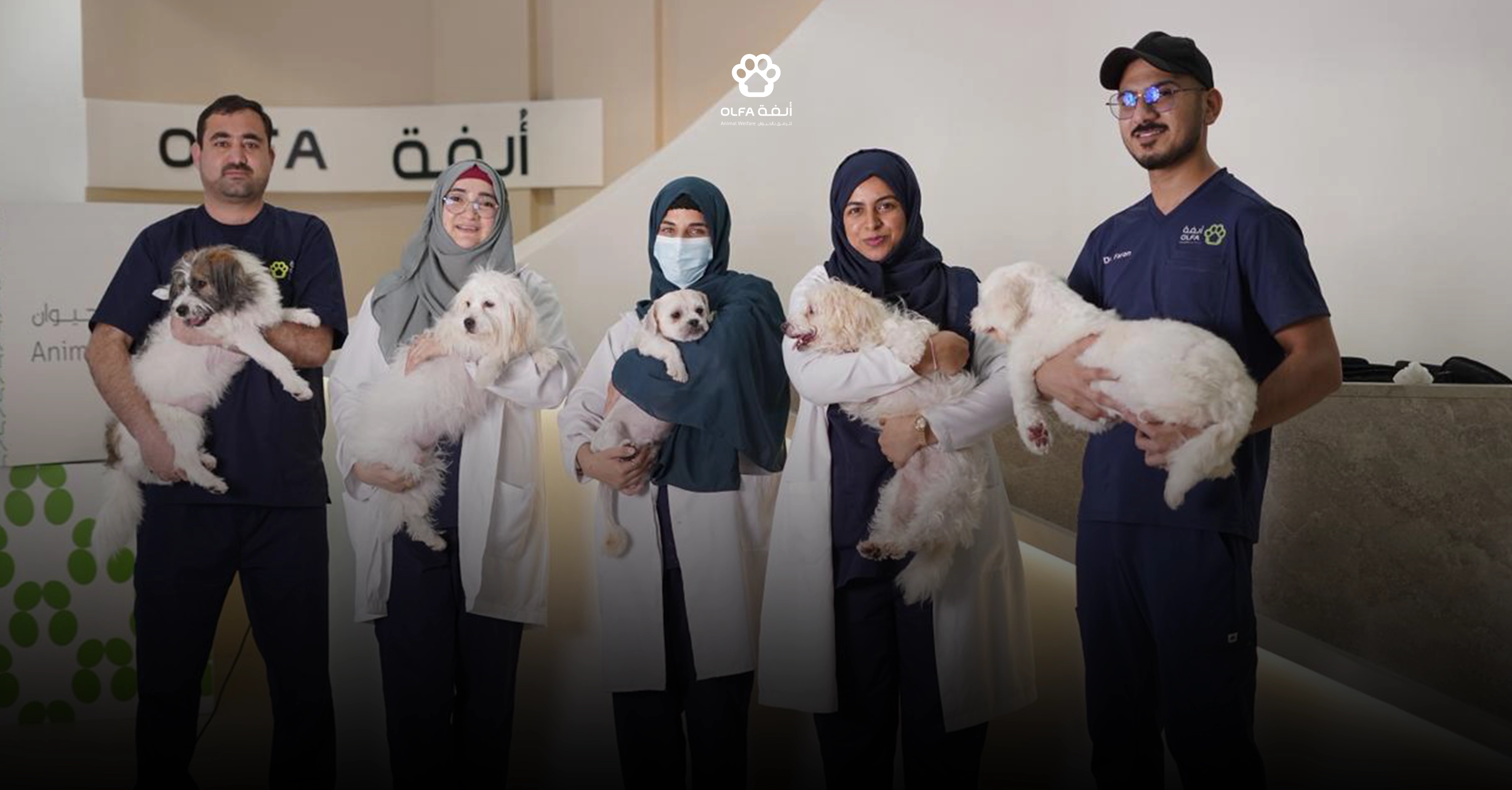
unknown dateWhen people hear about an animal welfare organisation, one image usually forms: a veterinarian and an animal. The image is accurate, but it is a small part of the picture. What happens between an animal arriving at a care centre and reaching a stable outcome passes through several disciplines, and each of them changes something along the way. This article is an attempt to open that door a little, to explain how a welfare organisation is actually staffed, and why this work is a professional discipline rather than an act of goodwill.
When people hear about an animal welfare organisation, one image usually forms: a veterinarian and an animal.
The image is accurate, but it is a small part of the picture. What happens between an animal arriving at a care centre and reaching a stable outcome passes through several disciplines, and each of them changes something along the way.
This article is an attempt to open that door a little, to explain how a welfare organisation is actually staffed, and why this work is a professional discipline rather than an act of goodwill.
The Veterinarian: Making Sure the Body Is Ready
The most visible role, and possibly the least understood in its detail.
Veterinary work inside a welfare organisation is different from work in a clinic that receives the public. It is directed at a specific question: is this animal in a condition that allows it to move safely to its next stage?
That includes examination, the preventive procedures the case and its pathway require, and confirming that the animal’s general condition is stable.
It is worth being clear about the boundary here. A welfare centre is not a veterinary clinic offering treatment services to the general public. Veterinary care is delivered within the organisation’s programmes, for the animals inside its care pathways.
The distinction is not cosmetic. It determines what the organisation can promise, and what it should be directing people elsewhere for.
The Behaviour Specialist: Reading What the Animal Does Not Say
This is the role nobody expects, and often the one that determines the outcome.
An animal arriving in a new environment is under stress, and it does not express that in the ways we expect. It may look aggressive when it is only frightened, or look calm when it has withdrawn completely.
The behaviour specialist’s job is to tell those states apart, and to build a plan that suits each one. The plan can begin with something almost surprisingly simple: a person sitting at a comfortable distance doing nothing at all, then reducing that distance gradually over days.
The goal is not to speed up interaction. The goal is that the animal is not forced into interaction before it is ready, because forcing it at this stage delays trust rather than building it.
This aligns with the Five Domains Model of Animal Welfare, which places behavioural interactions and mental state at the centre of how welfare is defined, not at its edge.
The Daily Care Team: The Work That Never Stops
Food, cleaning, observation, and time.
From the outside this role looks simple. In practice it has the greatest influence on an animal’s daily experience. The team that spends hours with the animals is the first to notice that one has stopped eating, or that another has started coming closer after weeks of keeping away.
Those observations are the raw material every other decision is built on. The veterinarian and the behaviour specialist rely on them, because they come from continuous observation rather than a passing visit.
This is why the stability and continuity of this team is not an operational detail. Animals learn people, and they settle around faces they recognise.
The Field Team: First to Arrive
Work outside the centre has its own conditions.
The heat, the timing, a location that may not be suited to it, and an animal that does not understand that the person approaching wants to help.
Safe field handling is therefore a learned skill, not simply good intentions. How you approach a frightened animal, how you move it without adding to its stress, how you plan the route so it spends no longer in transit than it needs to, all of it affects the state it arrives in.
The field team also carries out sterilisation, vaccination and return programmes, which are not measured by a single day but by continuity and coverage across months.
How Do These Roles Intersect?
The common error in picturing this work is imagining a chain: the vet examines, then the behaviour specialist steps in, then adoption takes over.
The reality is closer to a loop than a straight line.
An observation from the care team about an animal that stopped eating can reopen a health assessment that had been closed. A vet’s note about chronic pain can explain behaviour that was being read as aggression. An unsuccessful first adoption can return an animal to a fresh behavioural plan.
What distinguishes a good welfare organisation, then, is not that these specialisms exist. It is that information moves between them.
An animal does not divide itself into health, behaviour and environment. We do that, in order to organise the work. And then we have to reassemble the whole picture before we decide.
The Adoption Officer: Matching, Not Handing Over
The last role in the pathway, and the one that determines whether everything before it holds.
A successful adoption is not handing an animal to the first person who asks. It is an attempt to fit the animal’s temperament to the household’s way of living: how much time is available, who lives there, what level of activity the home can absorb, and who takes responsibility when the family travels.
These questions are not a test of the people asking. They are an attempt to avoid an outcome the animal pays for, because an adoption that breaks down returns the animal to the beginning after it had started to settle.
This is why follow-up continues for a period afterwards. The first weeks in a new home are the hardest for both sides.
And What About the Difficult Decisions?
Not every decision in this field is a comfortable one, and it would be dishonest to describe the roles without saying so.
Sometimes the most appropriate path for an animal is a return to its environment rather than staying in care. Sometimes an animal needs far longer than the person working with it would wish. And sometimes adoption is not a realistic outcome despite every effort.
It is precisely in these places that institutional practice proves its value. A decision built on a multi-disciplinary assessment sits closer to the animal’s interest than one built on individual sympathy, however genuine that sympathy is.
A team that can say “this is not the right path for this animal” is a team working to standards rather than to reflexes.
Why Does Naming These Roles Matter?
Because naming them changes how the work is understood.
When animal welfare is seen as an emotion, it gets judged by how much feeling it produces. When it is seen as a discipline, it gets judged by the quality of its decisions and by what those decisions did for the animal.
The practical gap between those two is wide. The first rewards the affecting moment. The second rewards the pathway that got an animal to a settled place.
At OLFA, this is how we understand our own work: a set of specialised roles, each carrying part of the responsibility for a single outcome.
Animal welfare does not rest on one person who loves animals.
It rests on a team where each person knows exactly what they change in one particular animal’s path.
Together, We Make a Difference
Have a question, want to report a stray, or ready to adopt? OLFA's team is here to help you every step of the way.